पहाड़ की कला, हाथों का हुनर
Some handmade art belongs in our everyday lives.
Pahadi art has been carried through generations — not only through paintings and patterns, but through the hands of women who have continued creating from their homes.
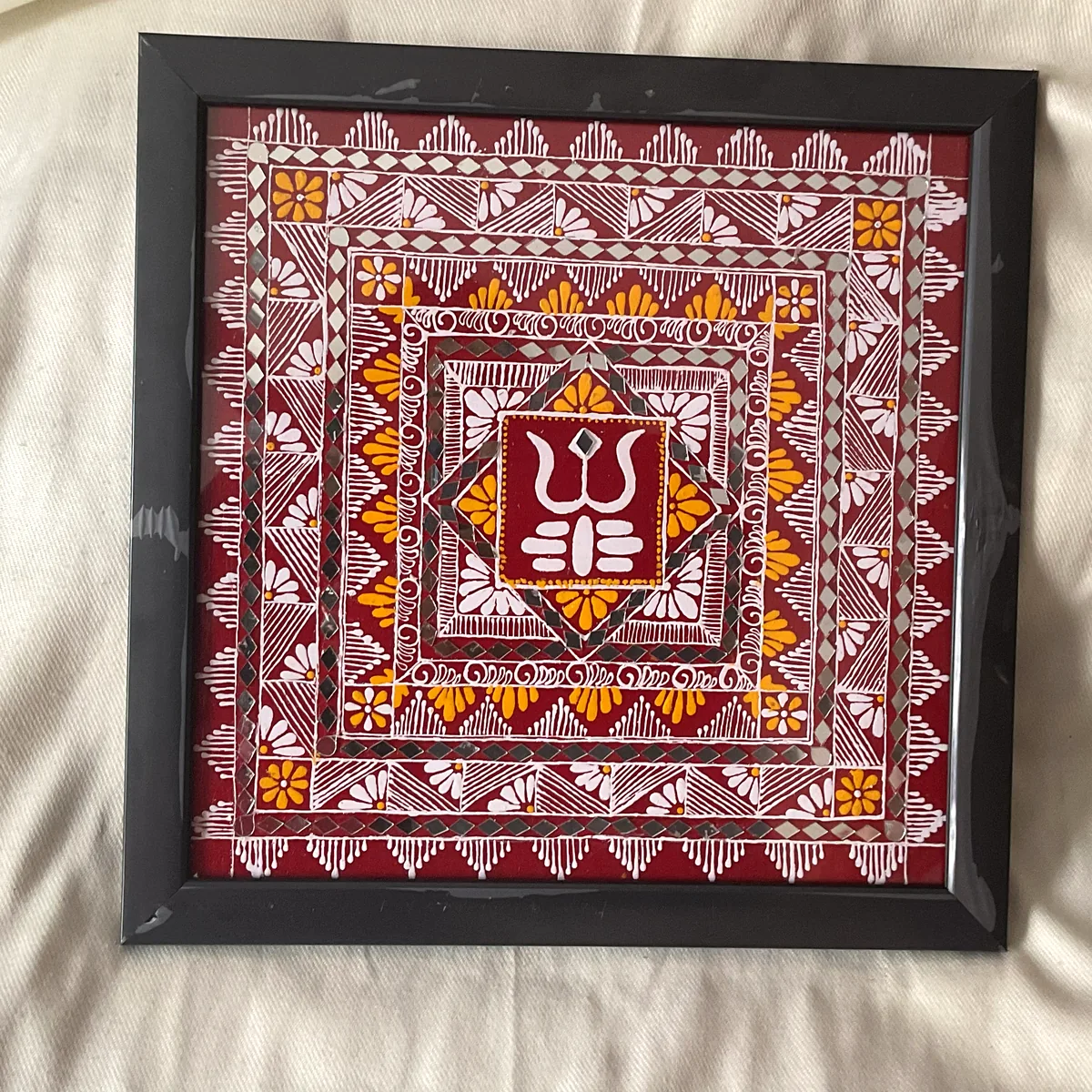
Him-Kala began in one of those homes in Kumaon, with a box of geru, a bowl of biswar, a basket of yarn and the patterns our mothers drew on the doorstep every Diwali.
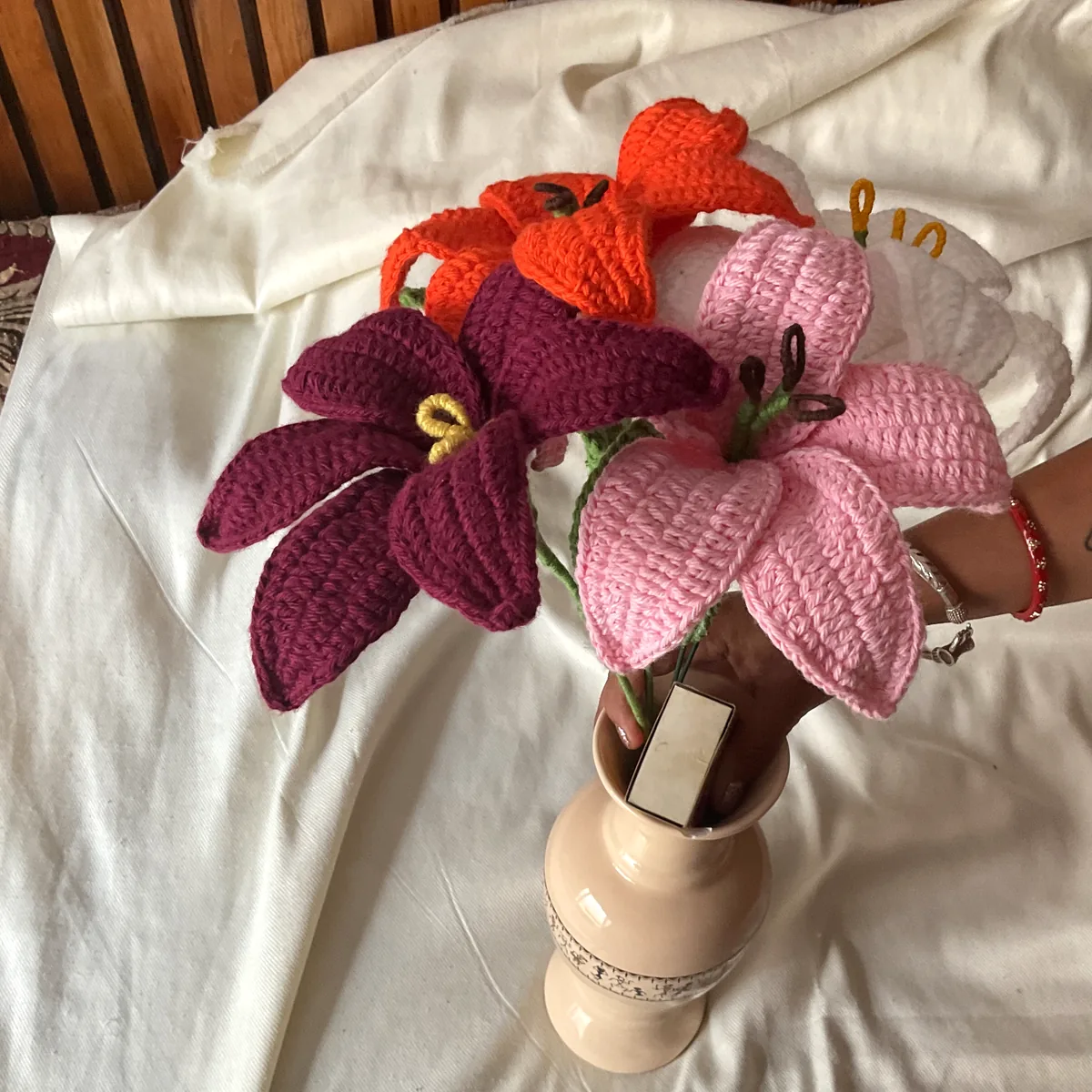
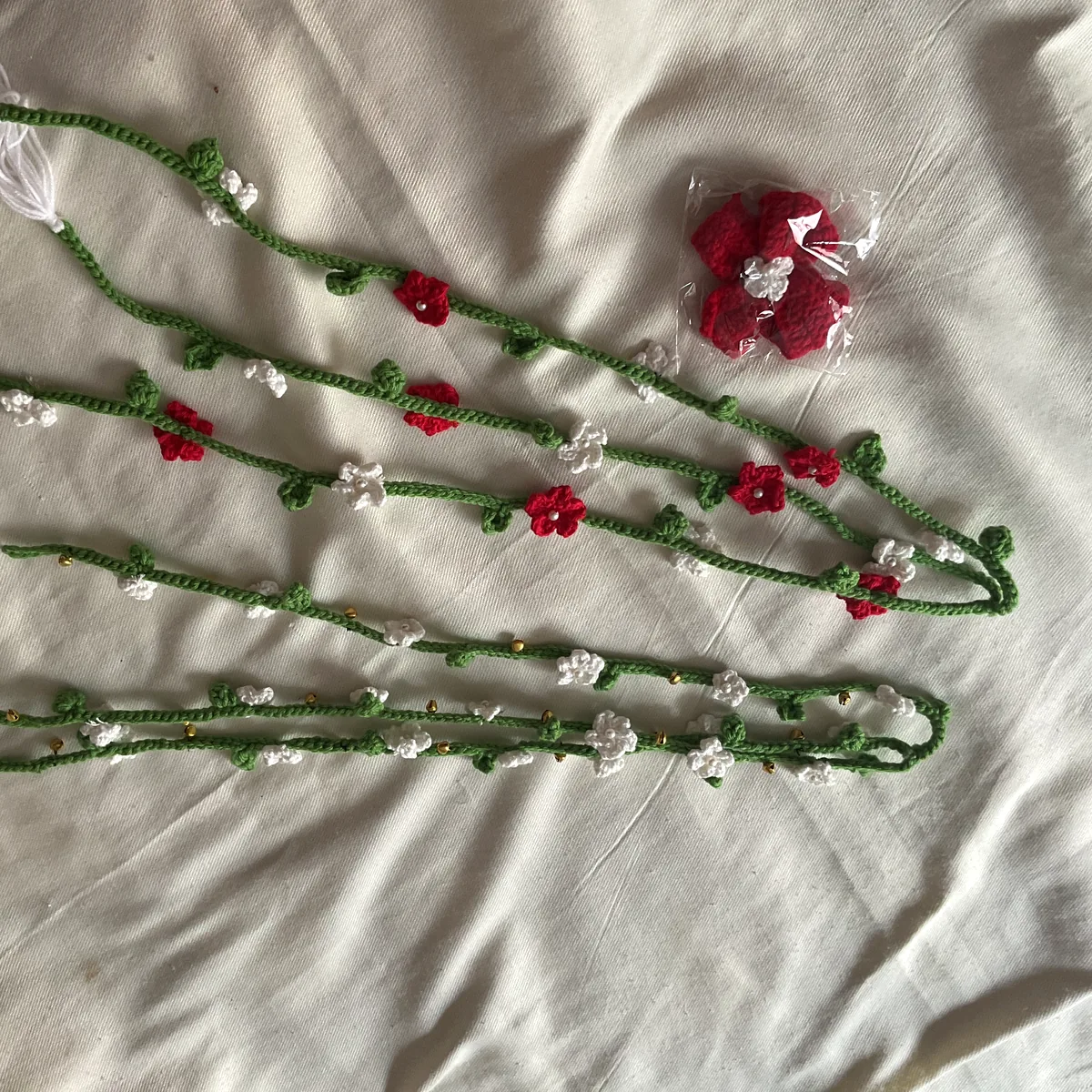
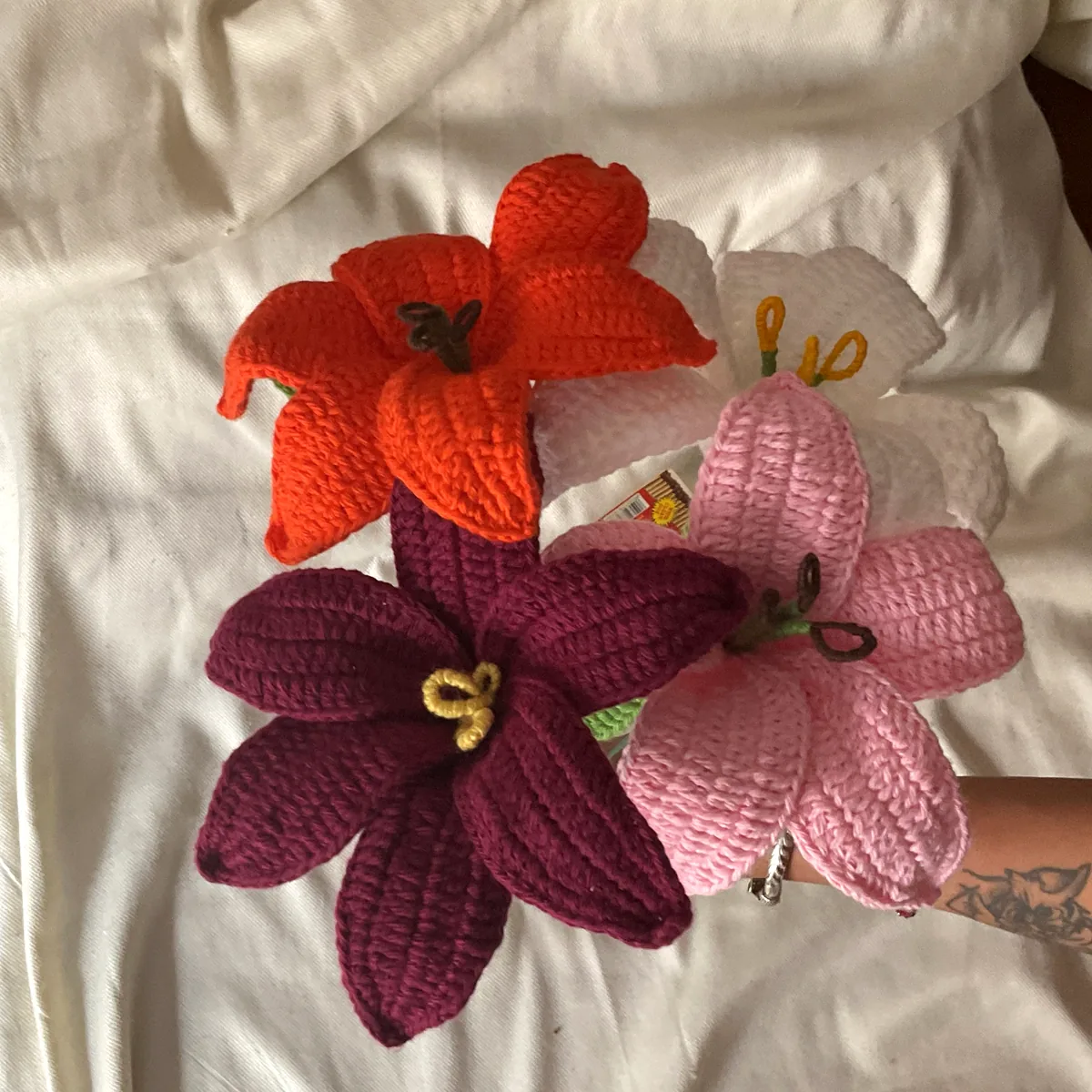
Today the same hands paint nameplates and pooja chowkis, hook lilies and parandis, and send them to homes across India — and to our stall at the fairs of Uttarakhand where we started.
Aipan carries the memory of the mountains.
Aipan (ऐपण) is the ritual floor and wall art of Kumaon. The ground is washed with geru, a red clay, then drawn on with biswar, a paste of soaked rice, using the last three fingers of the right hand. Every pattern has a purpose.
- Vasudharaवसुधारा
- Vertical white lines run down the threshold and the steps, so that plenty flows into the home.
- Lakshmi pauलक्ष्मी पाँव
- At Diwali, small footprints are drawn walking in from the door towards the mandir, to guide Lakshmi inside.
- Chowkiचौकी
- Square ritual drawings, each made for an occasion: a birth, a sacred thread, a wedding, a festival god.
Crochet carries the warmth of the hands that create it.
In the hills, winter evenings are long. Crochet fills them: flowers for the mandir, parandis for a daughter’s braid, a muffler for someone going down to the plains. Every stitch is counted by hand.
We bring these worlds together — not to let Pahadi craftsmanship become a memory, but to give it a place in the modern world.
Made from their homes
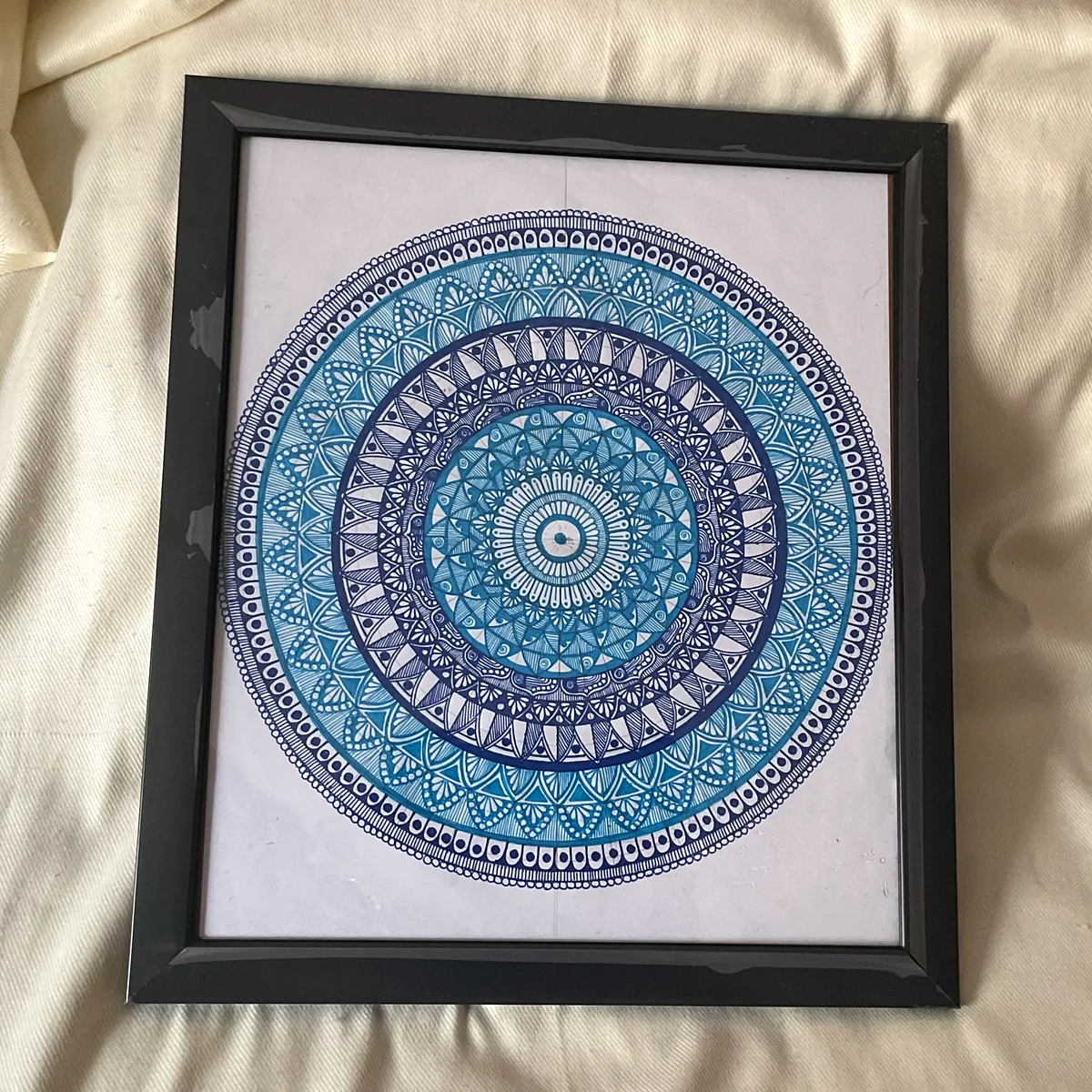
- Every piece supports a skill.
- Every pattern carries a story.
- Every handmade creation keeps a little piece of the mountains alive.